Slug: ip67-vs-ip68-led-neon-flex-outdoor-guide
Meta description: IP65, IP67, or IP68? What the ratings actually mean for outdoor LED neon flex — rain, jets, immersion, salt air — and how to choose for facades, landscapes, and pools.
目标关键词: waterproof led neon flex, ip67 neon, ip68 neon flex, outdoor neon flex, weatherproof neon light
Every outdoor lighting project eventually hits the same question: is IP67 enough, or do we need IP68? Pick wrong in either direction and you either overpay for protection you don’t need — or return in eighteen months to replace a failed run.
This guide explains what IP ratings actually test, how they apply to LED neon flex specifically, and how to match the rating to real outdoor conditions.
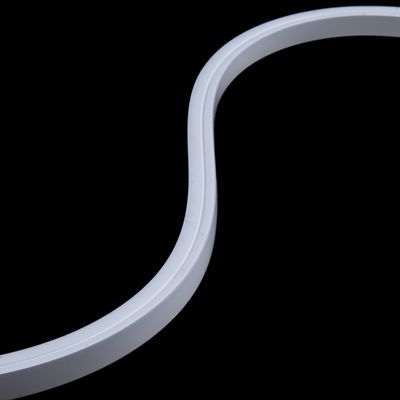
What IP Ratings Actually Mean
The Ingress Protection (IP) code has two digits:
- First digit — solids: 5 = dust protected, 6 = dust tight. Nearly all quality outdoor neon is IP6X.
- Second digit — water:
- 5: protected against water jets (low pressure, any direction)
- 7: protected against temporary immersion (1 m depth, 30 minutes)
- 8: protected against continuous immersion beyond 1 m, per conditions agreed between manufacturer and buyer
The key insight: IP67 is not "better IP65" — it’s a different test. IP7X tests short-term submersion; IPX5 tests sustained jets. A product can be IP67 yet fail under a pressure washer, which is why some outdoor products carry combined ratings like IP65+IP67.
For neon flex specifically, the weak points are never the silicone tube — they’re the cut ends, connectors, and joints. A tube rated IP68 fails in week one if the end cap was glued in the rain.
Matching the Rating to Real Conditions
IP65 — covered, rain-sheltered locations. Building entrances under canopies, soffits, and recessed ceiling details. Fine where water arrives as drifting spray, never as jets or pooling.
IP67 — exposed to weather, rain, and splashing. The workhorse rating for:
- Building façades and rooflines
- Landscape edges, planters, and pathways
- Bridge and railing outlines
- Outdoor signage in normal climates
Rain, snow, wind-driven spray, and brief puddling won’t harm a properly installed IP67 run. This covers 90% of outdoor architectural neon work.
IP68 — immersion risk or extreme exposure:
- Pool surrounds, fountains, and water features
- Ground-level runs in drainage-prone areas where water pools for hours
- Coastal installations combined with salt-mist exposure (verify salt-spray test data separately — IP ratings don’t test corrosion)
- Areas subject to pressure-wash cleaning
Outdoor Failure Modes That Have Nothing to Do With IP
After reviewing field failures across hundreds of projects, the pattern is consistent — most dead outdoor runs weren’t defeated by water ingress through the tube:
- Failed joints. Field-cut connectors and unglued end caps account for the majority of failures. Specify factory-sealed sections where possible; otherwise use the manufacturer’s glue-and-heat-shrink system on every penetration, and work in dry conditions.
- UV degradation. Cheap PVC tubes chalk, yellow, and crack within 1–2 years outdoors regardless of IP rating. Specify UV-stabilized silicone for anything in sunlight.
- Thermal cycling. Silicone handles temperature swings far better than PVC or epoxy-filled products, but connectors expand and contract at different rates — another reason to minimize field joints.
- Condensation. A sealed tube installed in humid conditions can trap moisture inside that never drains. Quality factories dry and seal tubes in controlled conditions; this is invisible in the product but visible in the warranty claims.
- Salt air. Coastal projects need silicone bodies AND corrosion-resistant wiring; ask for salt-mist test reports (IEC 60068-2-11 or equivalent).
Voltage and Power Considerations Outdoors
- 24 V DC is the safest choice for public-touchable installations (railings, benches, play areas) and gives the best dimming control, but runs are limited to roughly 10–15 m per feed without visible dimming.
- 110/220 V AC versions simplify long runs (50–100 m on a single feed) but require more care with accessibility and are harder to dim smoothly.
- Plan power injection points during design, not after the tube is mounted — trenching cable to a mid-run feed point post-install is painful.
How to Vet a Manufacturer’s IP Claims
Self-declared IP ratings are common and meaningless. Before specifying:
- Ask for a third-party test report (SGS, TÜV, Intertek) referencing the exact model number, not a family of products.
- Check the test method. IP68 should state depth and duration (e.g., 1 m / 24 h). "IP68" with no conditions is marketing.
- Verify the connector system is rated to the same level as the tube. Many "IP68 tubes" ship with IP65 connectors.
- Test a sample yourself: submerge a 1 m sample with connectors for 48 hours, then energize. It’s the cheapest insurance in the project.
YIZEE manufactures silicone neon flex with IP67 as standard and IP68 options across the range — every batch tested for immersion, every connector system shipped with matching IP certification.
→ Browse our silicone neon flex range or request outdoor samples and test reports.
Frequently Asked Questions
Is IP67 enough for outdoor use?
For rain-exposed architectural and landscape lighting, yes — IP67 handles rain, snow, and splashing indefinitely. Add IP68 only for immersion risk (pools, fountains, pooling water) or pressure-washing.
Can IP68 neon flex go in a swimming pool?
Not by default. Pool and fountain installations need IP68 plus proper low-voltage (12/24 V) feeds, GFCI/RCD protection, and materials rated for chemical exposure. Treat it as a specialty specification and involve the manufacturer early.
Does the IP rating cover connectors and end caps?
Only if they’re tested and certified as a system. This is the single most common gap between claimed and actual protection — always verify the connector rating matches the tube.
How long does outdoor silicone neon last?
Quality platinum-cured silicone with a protected LED core: 30,000–50,000 hours of LED life, with the silicone skin typically outlasting the LEDs. UV-stabilized silicone resists yellowing for 5+ years in full sun.
Can I repair a failed section outdoors?
Yes — cut out the failed section at marked cut lines, bridge with a new section using waterproof connectors, and re-seal. Keep 5–10% spare tube from the original batch for color-matched repairs.
Specifying outdoor neon for a façade, landscape, or hospitality project? Send us the drawings and exposure conditions — we’ll specify the rating, voltage, and sealing system, and provide test reports with samples. Request a factory quote.