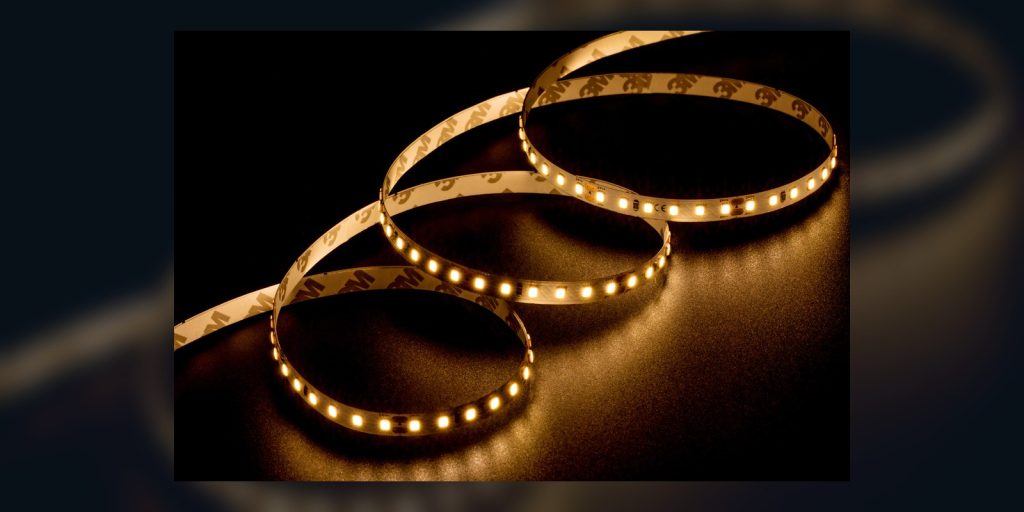
Many commercial lighting projects ask for long LED strip rolls, especially 50m or 100m continuous rolls. A continuous roll can make installation and logistics easier, but the electrical design still needs to be planned carefully. For low-voltage LED strips, the key issue is not only whether the strip can be produced in one roll. The key issue is how the full length will be powered safely and evenly.
Can LED Strip Lights Be Supplied as 100m Continuous Rolls?
Yes. For many indoor IP20 LED strip designs, a 100m continuous roll can be supplied for project use. This is often requested by installers, signage companies, exhibition contractors and distributors who want fewer joints and easier stock handling.
However, the roll length and the electrical running length are two different things. A 100m roll does not mean the entire 100m should be powered from one end. In real projects, the strip is normally cut into working sections and powered from multiple points according to voltage, power, PCB width and installation layout.
Why Voltage Drop Matters
LED strips are low-voltage products. When current travels along a long copper circuit, voltage gradually drops. If the installation is too long without power injection, the far end may become dimmer, color may shift, and the strip may work less reliably.
- 12V LED strips usually need shorter electrical sections because the current is higher for the same wattage.
- 24V LED strips are better for longer runs and commercial projects, but they still need proper power planning.
- Low power designs, such as 7W/m or below, are easier to manage than high-power strips, but voltage drop still needs to be checked.
Example: 12V Red LED Strip, 7W/m, 100m Roll
A 12V red LED strip with maximum 7W/m can be produced in long rolls for project use. But for installation, we normally recommend dividing the strip into shorter powered sections. The exact section length depends on PCB copper thickness, LED density, brightness requirement and whether the customer accepts slight brightness variation.
For red LED strips, buyers should also confirm the required wavelength. Common decorative red is often around 620-630nm, while 660nm deep red is used for more specific applications. Confirming the wavelength helps avoid mistakes before production.
Example: 24V RGB LED Strip, 7W/m, 100m Roll
For RGB LED strips, 24V is usually preferred for project installations. It helps reduce current compared with 12V and can support longer sections more comfortably. Still, RGB strips need attention to controller capacity, cable size and voltage drop on each color channel.
- Confirm whether the project needs RGB, RGBW or RGBCCT.
- Confirm the LED type, such as SMD5050 RGB or COB RGB.
- Confirm controller type: simple RF controller, DMX, SPI, DALI or other control system.
- Plan power injection points before installation.
What Buyers Should Confirm Before Ordering
- Voltage: 12V or 24V
- Color: red wavelength, RGB, RGBW or single color CCT
- IP rating: IP20 for indoor dry locations, or silicone protection for outdoor/wet areas
- Power per meter and expected brightness
- Roll length for packing and actual powered section length for installation
- Controller, power supply and cable layout
- Destination country and shipping method for quotation
YIZEE Lighting Support
YIZEE Lighting supports project-based LED strip customization, including long rolls, low-power LED strips, RGB LED strips, red LED strips, silicone neon flex and accessories. If you need 50m or 100m continuous rolls, we can help review the specification and recommend a practical wiring solution before quotation.
View LED Strip Series or send your project requirement for a quotation.